Every four years in spring, KU Leuven elects a new rector. Professors from different disciplines, faculties and groups compete in an election that helps shape the future direction of our university. And it’s not just your study advisor, professors or teaching assistants who get to vote — as a student, your vote counts too.
And it truly matters. Together, students make up a part of the electorate. Your vote can genuinely make a difference. That’s why it’s important to be well-informed about who the candidates are, what they stand for and what their plans are for KU Leuven.
On this page, we’ll share everything you need to cast your vote with confidence.
Elections 2024-2025
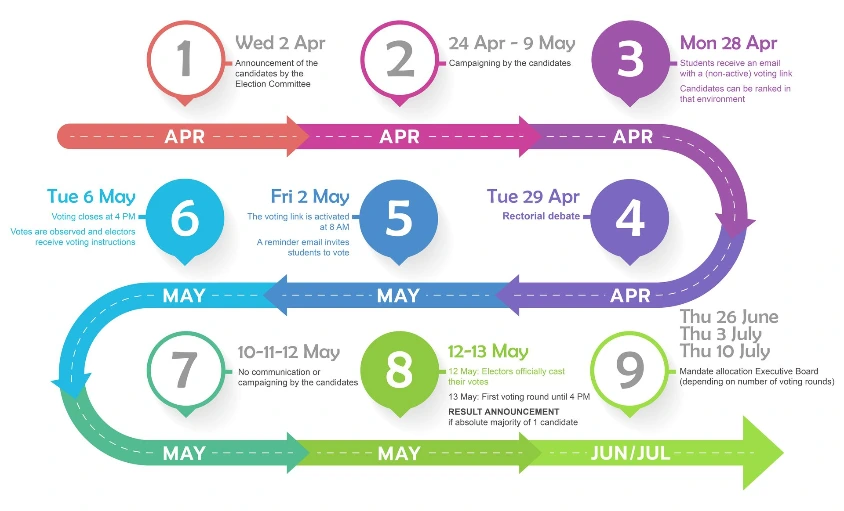
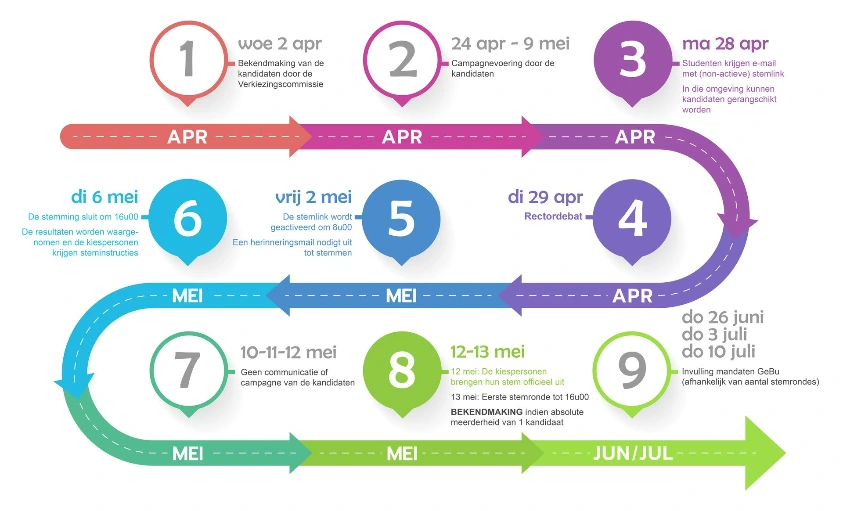
What you need to know about the rector electionsThis video gives you a clear overview of how the election process works.The timeline below shows which phase we’re currently in and the menu will be updated with new information as the election approaches.
What you need to know about the rector elections
This video gives you a clear overview of how the election process works.
The timeline below shows which phase we’re currently in and the menu will be updated with new information as the election approaches.
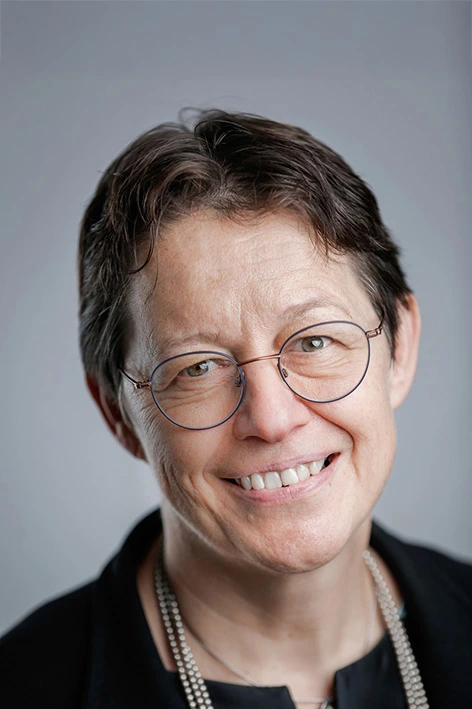
Tine Baelmans
- Engineering Sciences: Thermal Energy Technology
- 2009-2013: Vice-rector Student Policy
- 2013: Candidate rector vs Rik Torfs
- 2017-now: Vice-rector Education Policy
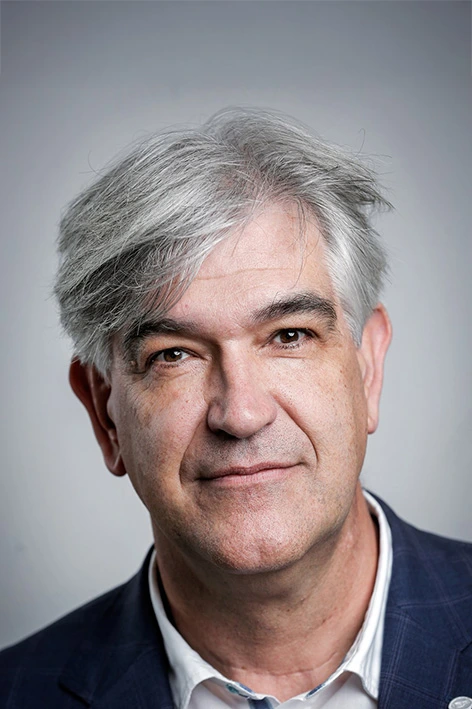
Peter Lievens
- Sciences: Physics
- 2009-2017: Dean Faculty of Sciences
- 2017-now: Vice-rector International Policy, Interculturality and Alumni Policy
InfoInfo
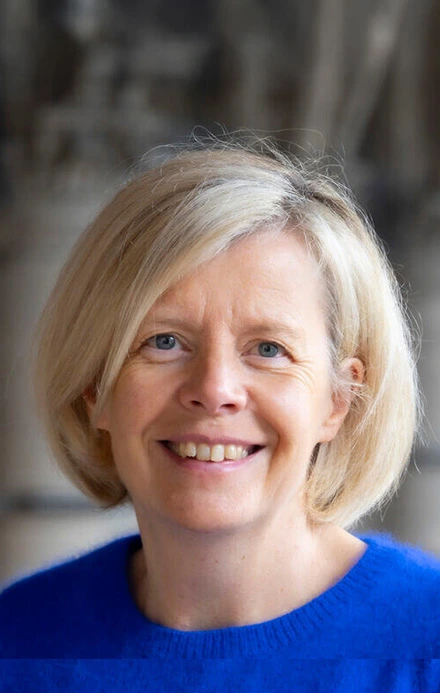
Severine Vermeire
- Medicine: Gastroenterology
- 2015-2021: Head of Department of Chronic Diseases and Metabolism
- 2020-2025: Research coordinator Group Biomedical Sciences
Info

How do students vote in the rector elections?
All KU Leuven students have the right to vote — and your voice matters! You vote through your Faculty Organ (FO) using an online voting system. There, you’ll rank the rector candidates from most to least preferred. It’s called instant-runoff voting, but really, it’s just a smart way to show your preferences clearly.
But here’s the thing: a good vote is an informed vote. Find out who the candidates are, what they stand for and what their plans are.
Got questions? Doubts? Not sure how it all works?
Reach out to your FO or drop by our office — we’re happy to help!
Talk about it. Think it through. Make your choice.
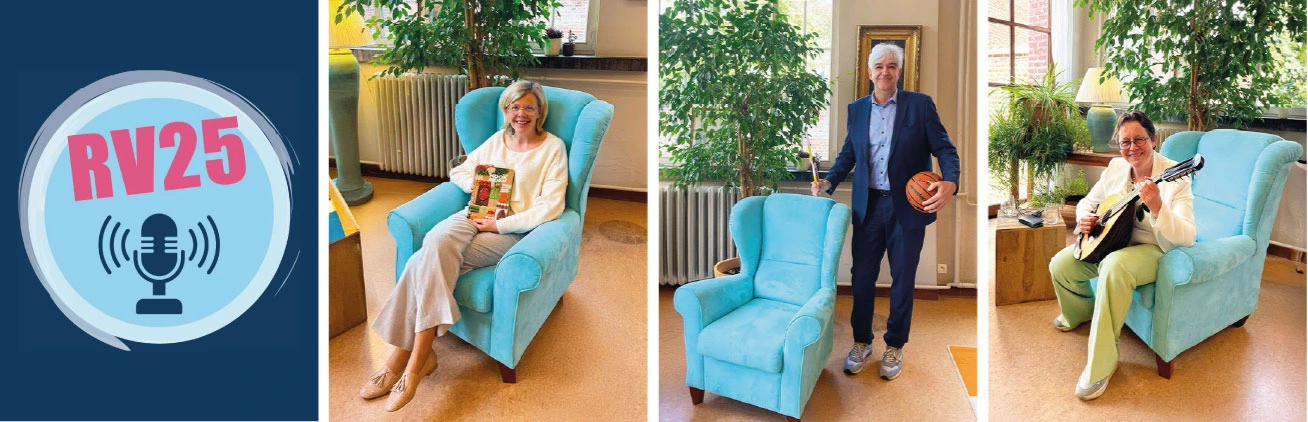
Curious about the story behind the elections?
Our four-part podcast series takes you behind the scenes of the rectorial elections. We not only talked to students about the importance of their vote, but also sat down with the three rector candidates to discover who they are as people – beyond the gown, their stories and their ambitions. After all, the person leading our university is just as important as their plans.
Missed it? Listen to the (Dutch speaking) series again via this link.
Watch the recording of the rector debate from Tuesday, 29 April 2025, where the three candidates, Tine Baelmans, Peter Lievens and Severine Vermeire, face off under the moderation of Ann De Bie.
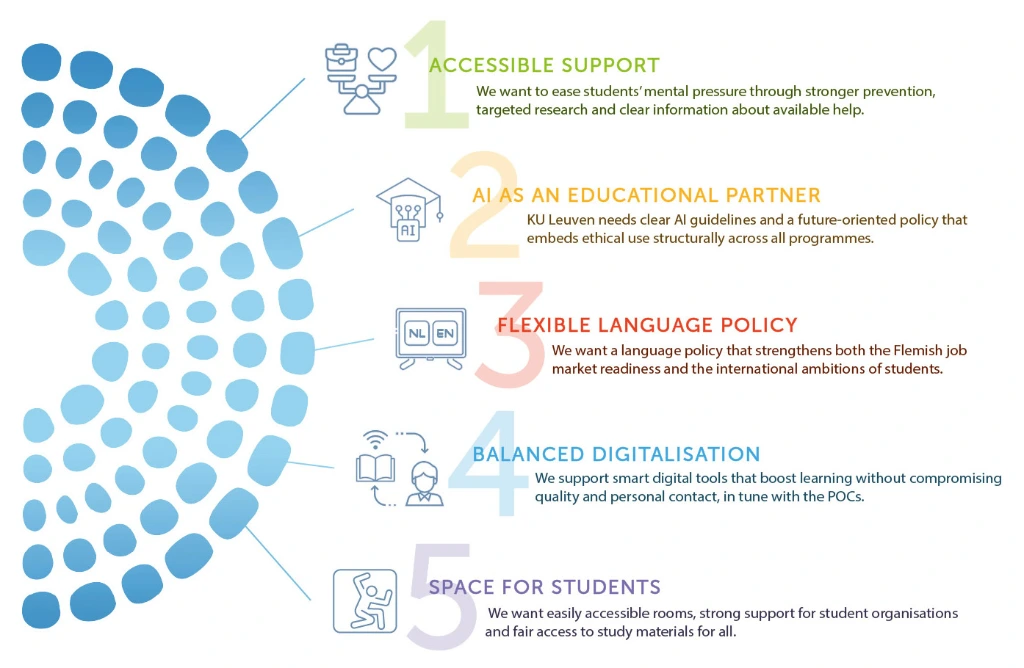
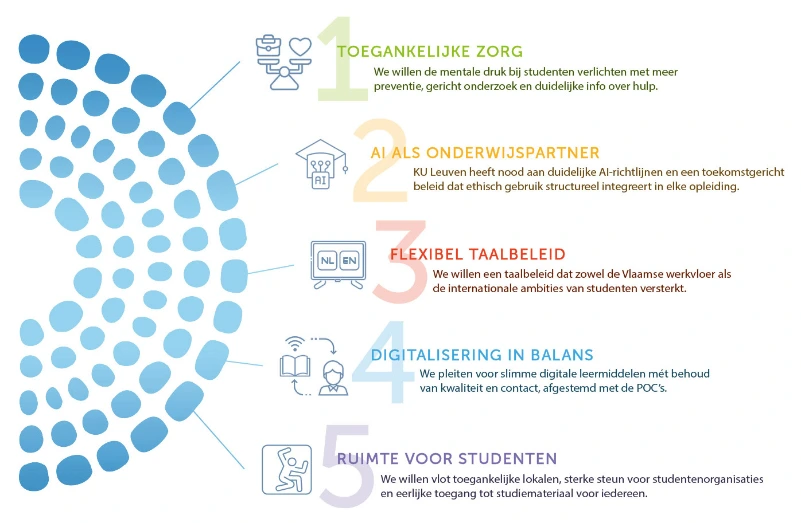
KU Leuven Student Council Election Memorandum 2025: shaping the university of tomorrow together
This document brings together our priorities, ambitions and proposals for the upcoming policy period. It was created through the broad involvement of student representatives from all campuses and was endorsed by the full General Assembly.
Our memorandum outlines the themes where we expect to see real progress: from mental well-being and housing to digitalisation, sustainability and inclusiveness. Every key point is rooted in a shared belief: a strong KU Leuven is one that listens to its students and shapes the future alongside them. Together, we strive for a university where every student feels at home, heard, and supported.
Discover our key priorities at a glance below or dive into the full memorandum via the PDF.
After a thorough evaluation, the student representatives introduced several substantive changes to the previous Special Election Regulations. These adjustments aim to make communication about the rector elections more accessible and easier to understand. In addition, the new regulations are designed to create a clearer and more user-friendly voting system for all students.
You can find the approved Election Regulations for the Student Vote in the 2025 rector elections below.
[Note that this is an unofficial translation of the Dutch version that has been approved by the General Assembly and the Academic Council]
On 12 and 13 May, the first round of the rectorial elections took place. The tension was palpable, but no candidate secured an immediate victory. The three candidates needed to win at least 50% of the weighted votes, including blank votes.
Prof. Vermeire led with 944 votes, followed by Prof. Baelmans (592 votes) and Prof. Lievens (571 votes). As a result, the two highest-scoring candidates advanced to the second round.
That decisive round took place on 19 and 20 May. Prof. Severine Vermeire was elected as the next rector, receiving 1,088 weighted votes – 51.9% of the total. Prof. Baelmans obtained 984 votes (46.9%), while 25 blank votes (1.2%) were recorded. With that, the required majority was met – just barely, but decisively.
She will begin her term on 1 August 2025, succeeding current rector Luc Sels, who was not eligible for re-election after serving two terms.
Stura would like to thank all candidates for their commitment, the engaging debates and the insightful podcast conversations. We also thank all students who made their voices heard – and the electors who proudly represented their faculties.
We look forward to a fruitful collaboration with Rector Vermeire, as we continue to champion student participation, well-being, sustainability and accessibility at KU Leuven.
Together with the new leadership, we’re excited to help shape a university where every student feels heard, supported and empowered.
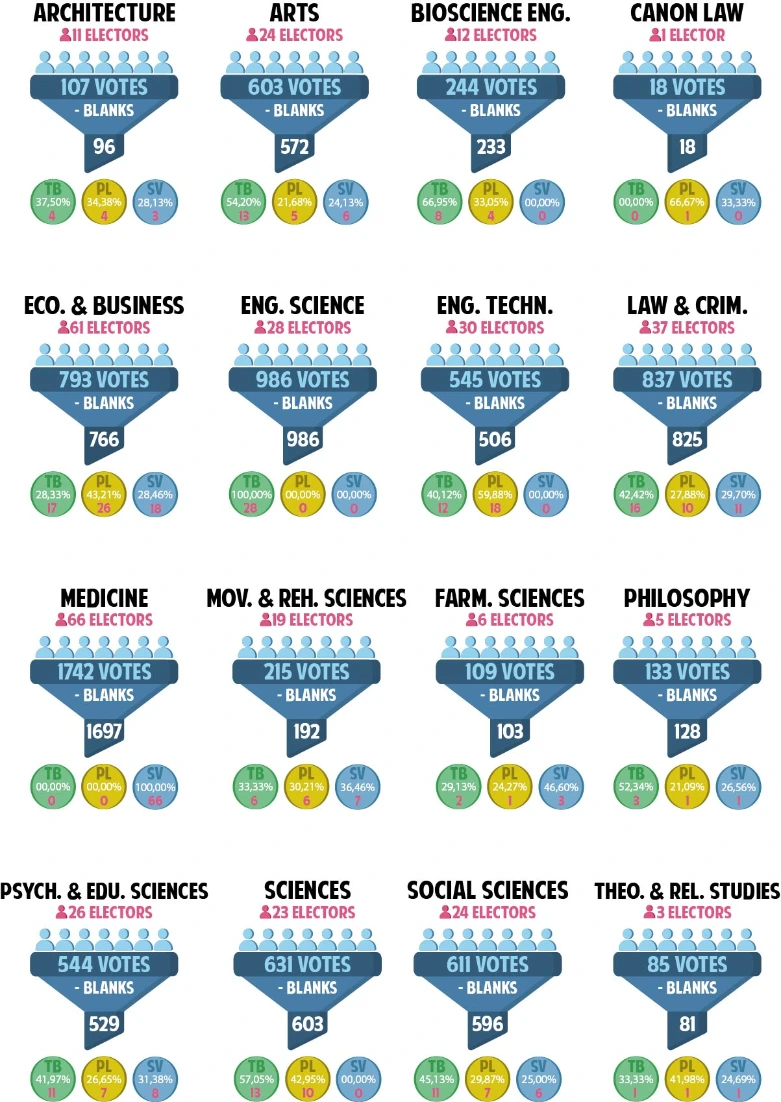
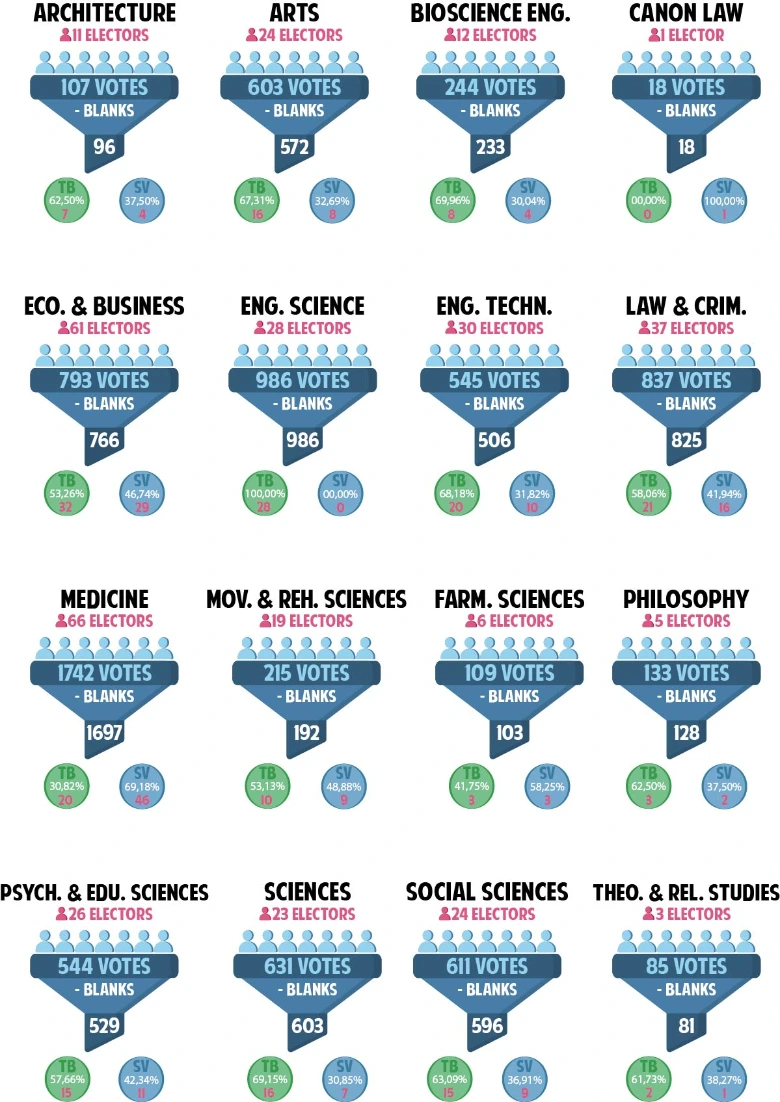
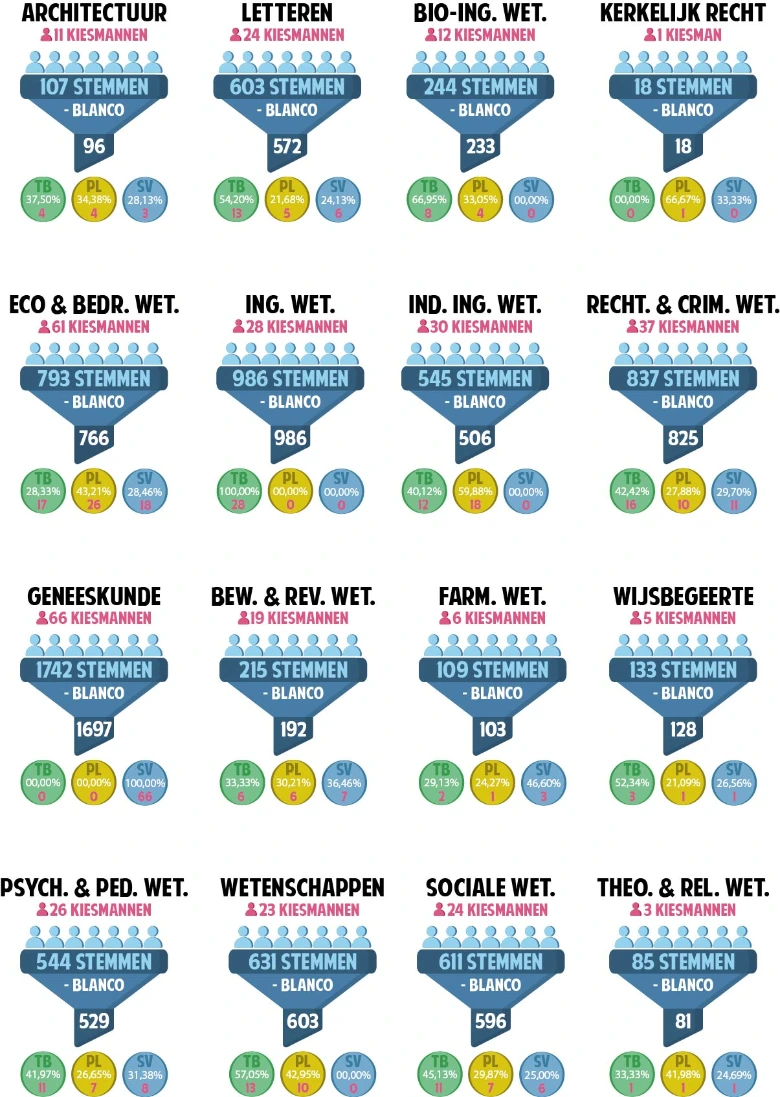
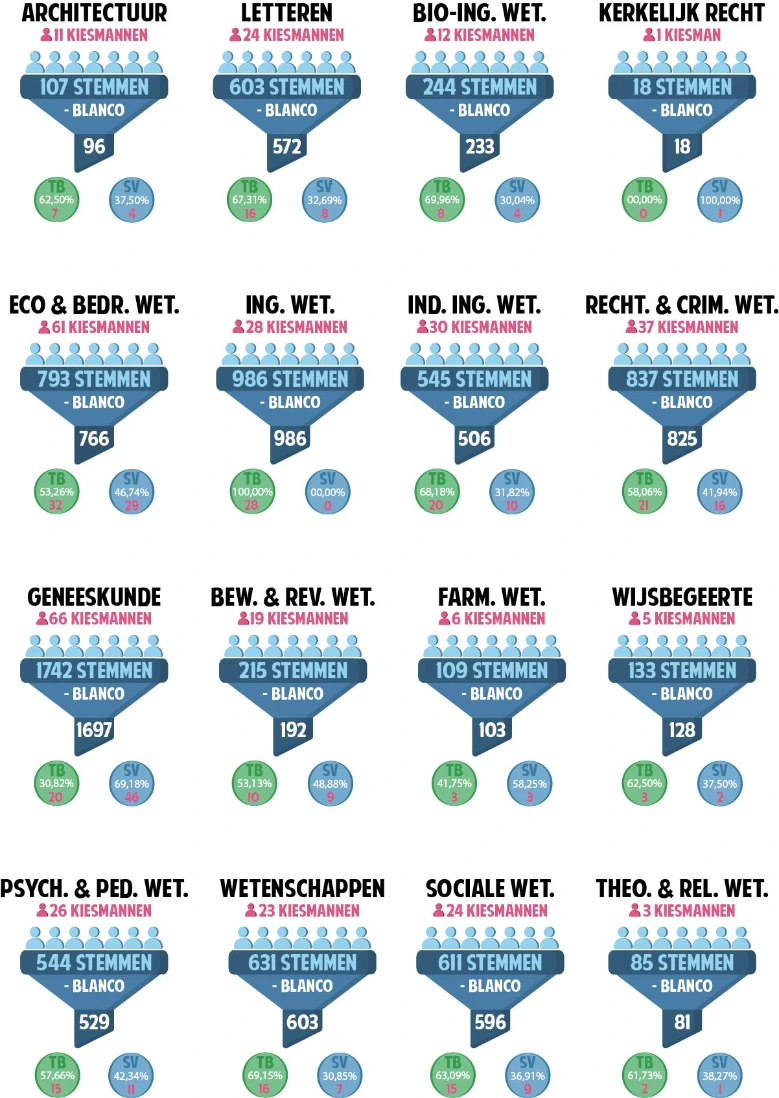
Below you can see the results of the student votes per faculty and how these translated into the distribution of electors.
What you need to know about the rector electionsThis video gives you a clear overview of how the election process works.The timeline below shows which phase we’re currently in and the menu will be updated with new information as the election approaches.
What you need to know about the rector elections
This video gives you a clear overview of how the election process works.
The timeline below shows which phase we are currently in and the menu will be updated as the election approaches.
Tine Baelmans
- Engineering: Thermal Energy Technology
- 2009-2013: Vice-Rector Student Policy
- 2013: candidate rector in the US Rik Torfs
- 2017-2025: Vice-Rector Education Policy
Peter Lievens
- Sciences: Physics
- 2009-2017: decaan faculteit Wetenschappen
- 2017-2025: Vice-Rector International Policy, Interculturality and Alumni Policy
InfoInfo
Severine Vermeire
- Medicine: Gastroenterology
- 2015-2021: Head of Department Chronic Diseases and Metabolism
- 2020-2025: Research Coordinator Group Biomedical Sciences
Info
How do students vote in the rector election?
All students of KU Leuven can make their voices heard! You vote through your faculty (FO) in an online voting system. There you rank the rector candidates from most to least favourite – it is called Instant-runoff voting, but it is actually just a clever way to make your preferences clear.
But: good voting means informed voting. Check who the candidates are, what they want and what they stand for.
Do you have questions? Doubts? Something unclear?
Talk to your FO or come by – we are happy to help!
Talk about it. Think carefully. Vote.
Curious about the story behind the elections?
Our four-part podcast series takes you behind the scenes of the rector elections. We not only spoke with students about the importance of their vote, but also with the three rector candidates about who they are as individuals – behind the gown, their stories and their ambitions. Because who stands at the head of our university is at least as important as their plans.
Missed it? Listen to the series again via this link.
Watch here the recording of the rector debate on Tuesday 29 April 2025, where the 3 candidates, Tine Baelmans, Peter Lievens and Séverine Vermeire, compete against each other under the guidance of Ann De Bie.
Election Memorandum Student Council KU Leuven 2025: building together towards the university of tomorrow
This document is a compilation of our priorities, ambitions and proposals for the upcoming policy period. It was created thanks to the broad involvement of student representatives from all campuses and was supported by the entire General Assembly.
Our memorandum outlines the themes on which we expect concrete progress: from mental well-being and housing to digitalisation, sustainability and inclusivity. Each focal point starts from one common belief: a strong KU Leuven is one that listens to its students and shapes the future together with them. Together we are working towards a university where every student feels at home, heard and supported.
Discover our focal points at a glance below or read the full memorandum via the pdf.
After a thorough evaluation, the student body made several substantive changes to the previous Special Election Regulations. With these adjustments, the aim was to achieve more accessible and better-understood communication regarding the rector elections. Additionally, the goal of the new regulations is to create a clearer and more user-friendly voting system for all students.
See below the approved Election Regulations for the Student Vote for the election of 2025.
On 12 and 13 May, the first round of voting for the rector election took place. The tension was palpable, but no one immediately secured victory. The three candidates had to achieve at least 50% of the weighted votes, including the blanks.
With 944 votes, Prof. Vermeire was in the lead, followed by Prof. Baelmans (592 votes) and Prof. Lievens (571 votes). Thus, the two highest-scoring candidates advanced to the second round.
This took place on 19 and 20 May, and there the decision was made: Prof. Séverine Vermeire was elected as the new rector, with 1,088 weighted votes, good for 51.9%. Prof. Baelmans received 984 votes (46.9%). With another 25 blank votes (1.2%), the required majority was thus narrowly, but decisively, achieved.
From 1 August 2025, she will take on the rectorship, as the successor to the current rector Luc Sels, who could not stand for election after two terms.
Stura would like to thank all candidates for their commitment, the engaging debates, and the enlightening podcast discussions. Thanks also to all students who made their voices heard – and to the electors who acted with great responsibility as the voice of their faculty.
We look forward to a fruitful collaboration with rector Vermeire, in which we student participation, well-being, sustainability and accessibility want to put further on the map.
Together with the policy, we will continue to build a KU Leuven where every student feels heard and supported.
Below you can see the results of the student votes per faculty and how that translated into the distribution of the electors.
Elections 2020-2021
Rectoral elections are held every four years in the spring. Professors from various disciplines, faculties and groups then compete against each other. Not only your student advisor, professors or assistants have the right to vote. As students, we were able to help determine the outcome of this battle. But how did this all work? And what does the role that candidates aspire to actually entail? We told you all about it in the run-up to the past elections. As a student, you had the opportunity to make your voice heard through your Faculty Consultative Body.
Luc Sels
Most of us were already familiar with Professor Sels, as he was the sitting rector. Before his tenure as rector, he served as the dean of the Faculty of Economics and Business from 2009 to 2017.
Jan Tytgat
Professor Tytgat – who described himself not as an opposing candidate but as an alternative candidate – challenged the sitting rector, Sels. During the election period, he was the head of the Department of Toxicology and Pharmacology within the Faculty of Pharmaceutical Sciences.
The 2016-2017 rector election was an incredibly close race. Professor Sels won with 50.58% of the vote, narrowly defeating incumbent rector Professor Torfs. With a margin of less than two percentage points, the outcome was decided by the smallest of differences.This showed how a small group can make a big impact! Especially as students, we can have a significant influence if we organize ourselves well. After all, we represent about 10% of the total votes. For candidates, it is therefore crucial to have supporters in every voting group.
As in previous rector elections, Stura organized both an internal and an external debate in the weeks leading up to the election. During these debates, candidates had the opportunity to elaborate on their views and answer students’ questions.
The internal debate, held on Friday, 30 April 2021, was organized for the members of the General Assembly. This debate allowed the GA to ask all their questions directly.
The external debate, which took place on Monday, 26 April 2021, was open to the broader public, specifically all KU Leuven students. The debate was moderated by Wim De Vilder.
You can rewatch this debate here!
Every student at KU Leuven had the opportunity to vote for the new Rector. However, they did not all have to go to the ballot box themselves. The General Assembly chose to work with electors, who were fairly distributed over the student numbers of the faculties. For example, the smaller Faculty of Theology and Religious Studies received 3 out of 332 electoral votes for their faculty student vote, while the Faculty of Law & Criminological Studies received 30 out of the total.
Voting was conducted through Faculty Congresses, which were organized by the student representatives of each faculty. A discussion took place at these congresses, after which students were able to cast an informed vote. The Rector candidate who obtained the most votes at a Faculty Congress then received all the student votes that the representatives of that faculty were allowed to cast. Going back to the example above, this meant that if you are a Criminology student and cast a vote at your Faculty Congress, 30 of the 332 student votes would go to the rector candidate who won the majority at that Congress’ vote.
Students who studied at more than one faculty cast their vote at the Faculty Congress of the faculty where they took the most credits.
To avoid fragmentation of our voting block, student representatives constantly coordinated with each other. They worked out Election Regulations that helped determine the way students could cast their votes. Consider the number of electors each group received. For example, there are many more Civil Engineers than Canon lawyers studying at KU Leuven. They also considered whether students should, for example, vote for the same candidate during a second or third round of voting. After all, the first round does not always produce an absolute majority for a particular candidate.
All this tinkering with election procedures happened mainly in the working group rectorial elections. This group consisted of members of Stura and representatives from each Faculty Consultative Body, from the economists of StEB to the scientists of OOR and philosophers of NFK. They provided regular feedback to the General Assembly. After several months of adjustment and further refinement, the Election Regulations appeared for a final time at the GA. The debate was opened. Members expressed concerns, asked questions and approved the regulations when they agreed. After GA approval, the regulations went to the Academic Council for further consideration.
View the approved Student Voice Election Regulations for the 2021 election below.
[Note that this is an unofficial translation of the Dutch version that has been approved by the General Assembly and the Academic Council]
The Rector for 2021-2025 was announced on 11 May 2021.
All electors left for the ballot box (digitally) that day. The votes were counted: Prof. Sels was re-elected rector of KU Leuven for a four-year policy term with 63.9% of the votes.
Stura thanked both candidates for the interesting debates and good cooperation.
In addition, we thanked our FSC’s, campus councils and every student who cast a vote through a Faculty Congress for their efforts.
As Student Council we put our trust in a constructive cooperation with Rector Sels.
Elections 2020-2021
Om de vier jaar vinden er in de lente rectorverkiezingen plaats. Professoren uit uiteenlopende disciplines, faculteiten en groepen nemen het dan tegen elkaar op. Niet alleen je studieadviseur, professoren of praktijkassistenten hebben daarbij stemrecht. Als studenten konden wij mee de uitkomst van deze strijd bepalen. Maar hoe ging dit allemaal in zijn werk? En wat houdt de rol die kandidaat-rectoren zo ambiëren eigenlijk in? Daar vertelden we je in de aanloop van de verkiezingen alles over. Als student kreeg je de mogelijkheid om via jouw Facultair Overlegorgaan je stem te laten horen.
Luc Sels
Onder de meesten van ons was Professor Sels reeds gekend, hij was immers de zittend rector. Vóór zijn mandaat als rector was hij van 2009 tot 2017 decaan van de Faculteit Economie en Bedrijfswetenschappen.
Jan Tytgat
Professor Tytgat - who described himself not as a rival candidate, but as an alternative candidate - challenged sitting rector Sels. During the election period, he was head of the Department of Toxicology and Pharmacology within the Faculty of Pharmaceutical Sciences.
De rectorverkiezing van 2016-2017 was een erg spannende race. Professor Sels won toen met 50,58% van zittend rector Professor Torfs. Met een verschil van minder dan twee procentpunten werd de uitkomst van de strijd bepaald. Toen was het duidelijk dat een kleine groep een groot verschil kan maken! Zeker als studenten kunnen wij doorwegen als we ons goed organiseren. Wij vertegenwoordigen namelijk zo’n 10% van het totaal aantal stemmen. Voor kandidaten is het dan ook erg belangrijk om fans te hebben in élk van de stemgerechtigde groepen.
As with previous rector elections, Stura organised an internal and an external debate in the weeks leading up to the election. Candidates could further elaborate on their positions during these debates and answer questions from the students.
Het intern debat, dat op vrijdag 30 april 2021 plaatsvond, werd georganiseerd voor de leden van de Algemene Vergadering. Tijdens dit debat kon de AV al haar vragen kwijt.
Het extern debat, dat plaatsvond op maandag 26 april 2021, was bedoeld voor het bredere publiek, namelijk alle studenten van KU Leuven. Het debat werd gemodereerd door Wim de Vilder.
You can watch the debate here again!
Elke student aan de KU Leuven kreeg de kans om mee te stemmen voor de nieuwe Rector. Zij hoefden echter niet allemaal zelf naar de stembus te gaan. De Algemene Vergadering koos er namelijk voor om te werken met kiespersonen, welke eerlijk verdeeld werden over de studentenaantallen van de faculteiten. Zo kreeg de kleinere faculteit Theologie en Religiewetenschappen bijvoorbeeld 3 van de 332 kiespersonen voor hun facultaire studentenstem, terwijl de faculteit Rechtsgeleerdheid & Criminologische Wetenschappen er 30 kreeg op het totaal.
Het stemmen verliep via Facultaire Congressen, die door de studentenvertegenwoordigers van elke faculteit werden georganiseerd. Op deze congressen vond een discussie plaats, waarna studenten in staat waren om een weloverwogen stem uit te brengen. De rectorkandidaat die op een Facultair congres de meeste stemmen behaalde kreeg vervolgens alle studentenstemmen die de vertegenwoordigers van die faculteit mochten uitbrengen. Als we teruggrijpen naar het bovenstaande voorbeeld, betekende dit dat als jij een student Criminologie bent en op jouw Facultair congres een stem hebt uitgebracht, er 30 van de 332 studentenstemmen gaan naar de rectorkandidaat die op de stemming van dat congres de meerderheid behaalde.
Studenten die aan meer dan één faculteit studeerden, brachten hun stem uit op het Facultair congres van de faculteit waar zij de meeste studiepunten opnamen.
KU Leuven is een universiteit vol bruisend talent en mogelijkheden. Ze zit bij de top van de Europese universiteiten en is ze met haar meer dan 60.000 studenten de grootste van Vlaanderen. Om de vier jaar krijgt iedereen werkzaam of studerend aan de de KU Leuven de mogelijkheid om het centraal beleid van de instelling te (her)verkiezen. Dan wordt de vraag gesteld wie de rode baret kan dragen tijdens de opening van het academiejaar en andere plechtige gelegenheden van de universiteit.
Naar traditie maken ook de studenten op dat moment een reflectie van de universiteit en haar beleidstraject. De laatste is terug te vinden in onderstaand memorandum. Deze tekst gaat in op een zeer breed gamma aan onderwerpen: van mentaal welzijn tot onderwijsbeleid tot structurele topics. Om de studentenstem zo krachtig en luid mogelijk te laten weerklinken, stelde de Studentenraad KU Leuven deze tekst samen met alle facultaire overlegorganen en de campusraden aan de KU Leuven en werd er rechtstreeks vanuit de studenten input verzameld. Vele gesprekken gingen deze gedragen tekst vooraf.
Read the full key points text 2021-2025 below!
Om versnippering van ons stemblok te vermijden, stemmen studentenvertegenwoordigers voortdurend met elkaar af. Zij werkten een Verkiezingsreglement uit dat mee de manier bepaalde waarop studenten hun stem konden uitbrengen. Denk aan het aantal kiespersonen dat elke fractie kreeg. Er studeren bijvoorbeeld heel wat meer Burgerlijk Ingenieurs dan Kerkjuristen aan KU Leuven. Ook bogen zij zich over de vraag of studenten bijvoorbeeld voor dezelfde kandidaat moeten stemmen tijdens een tweede of derde stemronde. De eerste ronde levert namelijk niet altijd een absolute meerderheid op voor een bepaalde kandidaat.
Al dit sleutelen aan verkiezingsprocedures gebeurde voornamelijk in de werkgroep rectorverkiezingen. Hierin zetelden leden van Stura en vertegenwoordigers uit elk Facultair Overlegorgaan, an de economen van StEB tot de wetenschappers van OOR en filosofen van NFK. Zij koppelden regelmatig terug naar de Algemene Vergadering. Na enkele maanden van aanpassen en verder verfijnen, verscheen het Kiesreglement voor een laatste keer op de AV. Het debat werd geopend. Leden uitten hun bedenkingen, stelden vragen en keurden het reglement goed wanneer ze akkoord gingen. Na de goedkeuring van de AV ging het reglement naar de Academische Raad voor een verdere behandeling.
See below the approved Election regulations for the Student vote for the election of 2021.
De rector voor 2021-2025 werd bekendgemaakt op 11 Mei 2021.
Alle kiespersonen vertrokken die dag (digitaal) naar de stembus. De stemmen werden geteld: Prof. Sels werd met 63.9% van de stemmen herverkozen tot rector van KU Leuven voor een beleidstermijn van vier jaar.
Stura thanked both candidates for the interesting debates and good cooperation.
In addition, we thanked our FO's, the campus councils and every student who cast a vote via a Faculty Congress for their commitment.
We legden als Studentenraad ons vertrouwen op een constructieve samenwerking met rector Sels.